Recovering a drone’s pose by decomposing a planar homography over an April Tag grid, and its velocity from KLT feature tracks cleaned up with RANSAC.
Abstract
Given a planar distribution of April Tags and corresponding images captured from the drone, the planar homography matrix is formulated and decomposed into rotation and translation vectors, respecting the orthonormality constraints. To estimate the drone’s velocity as it moves between frames, feature points are extracted and tracked with a KLT tracker, giving the velocity of the features across frames. The velocity of the drone then follows from the motion model, with RANSAC applied for outlier rejection.
Pose from a planar homography
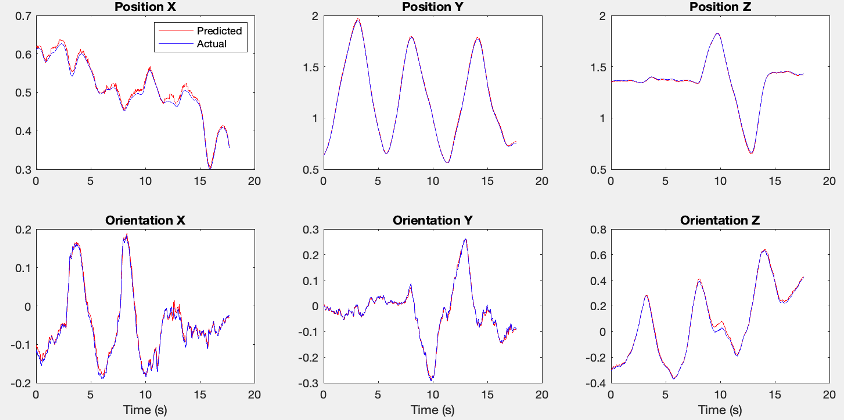
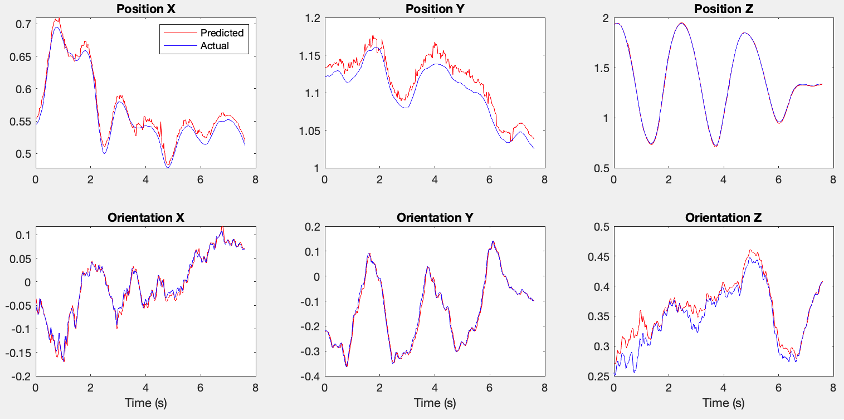
The April Tag grid gives a known planar structure. Matching observed tag corners against that structure yields a homography per frame, which is decomposed into a rotation and a translation — the camera pose — while enforcing orthonormality on the rotation.
Velocity from feature tracks
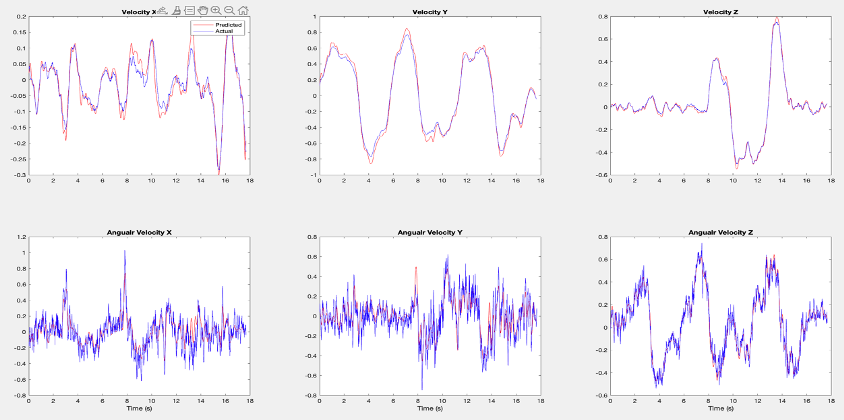
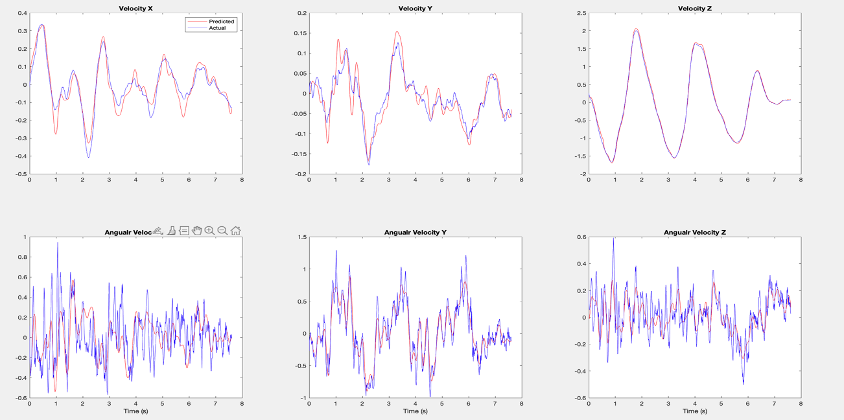
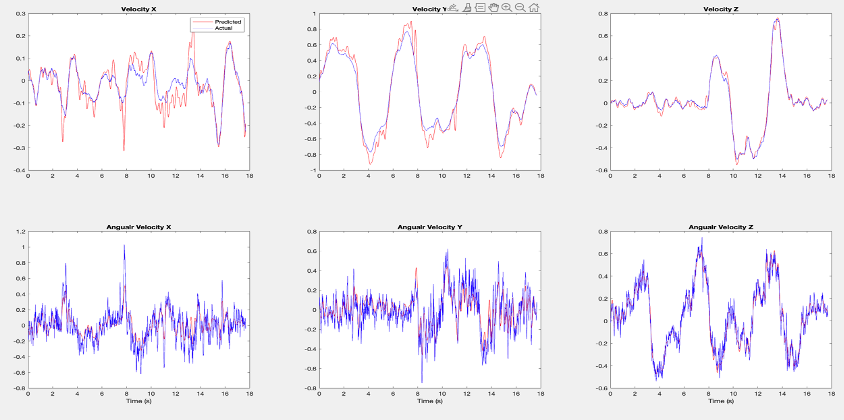
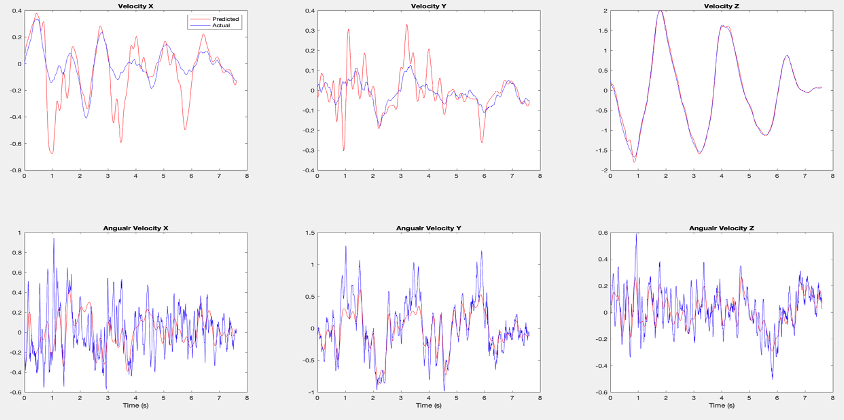
Feature points are extracted from each frame and followed with a KLT tracker. Their apparent motion between frames, combined with the motion model, gives an estimate of the drone’s linear and angular velocity.
RANSAC outlier rejection
Tracked features are not uniformly reliable — features on moving objects, or badly tracked ones, corrupt the estimate. RANSAC rejects those outliers before the velocity is computed, visibly tightening the result.