A compliant, under-actuated gripper that adapts to what it grasps. Lightweight, rapid-prototyped, and forgiving of uncertainty in object shape and position.
Development
Development of the gripper consisted of four main parts.
Gripper design
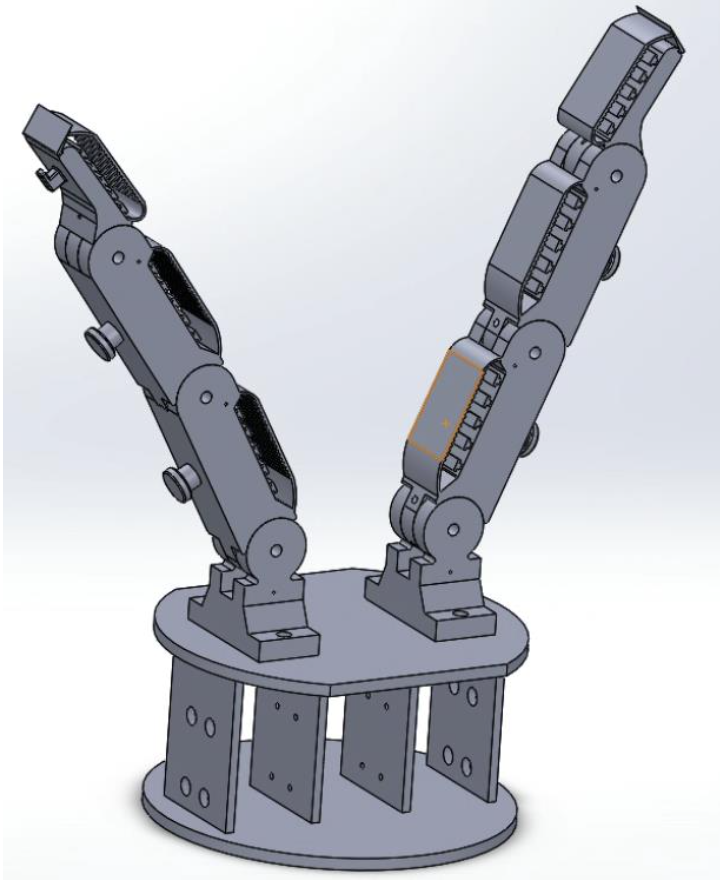
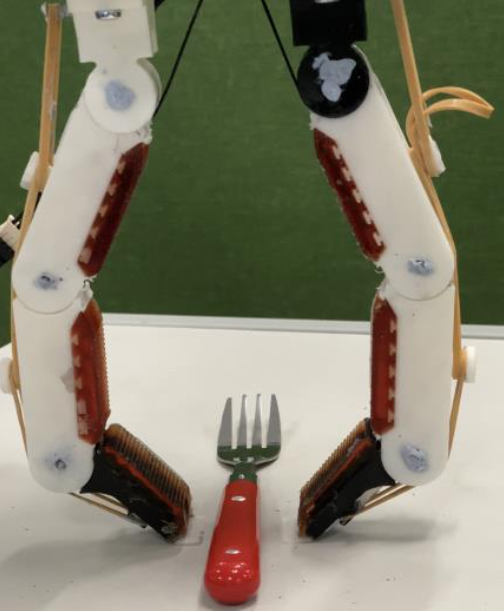
The gripper has three joints per finger, each finger consisting of three sections that pivot around those joints to grip the object. The fingertip is slightly smaller than the other joints, and the fingernail is small but protrudes enough to pick up low-profile objects. The complete design consists of two grippers, a base, and room for the motor and tendon routing. Moulding compound is poured into the mould areas atop each finger, allowing the gripper to grasp with compliance.
Motor selection and tendon routing
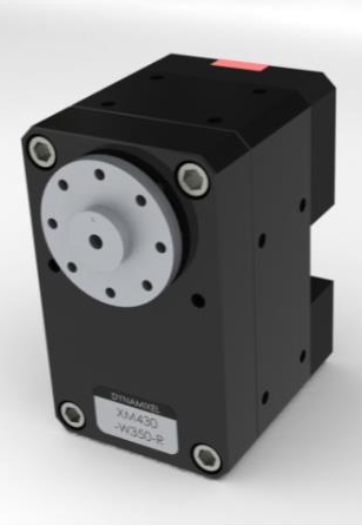
An XM430 motor was selected, chosen for its enclosure design and minimal mass. The enclosure comes with holes pre-threaded on the sides, so the motor attaches to the gripper base by screwing straight through the base into the motor. That keeps the design simple and light, with no extra mounting material or housings.
A rope tendon was chosen. Nylon would also work, but stretches when the motor applies larger torques; rope provided strength and manoeuvrability. To attach the tendons to the motor, a pulley was designed that mounts to the motor with the tendons routed through holes at its edge.
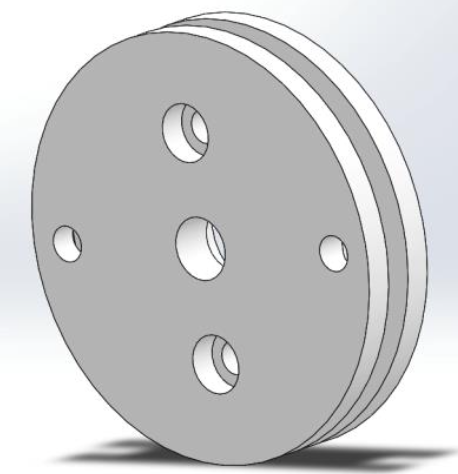
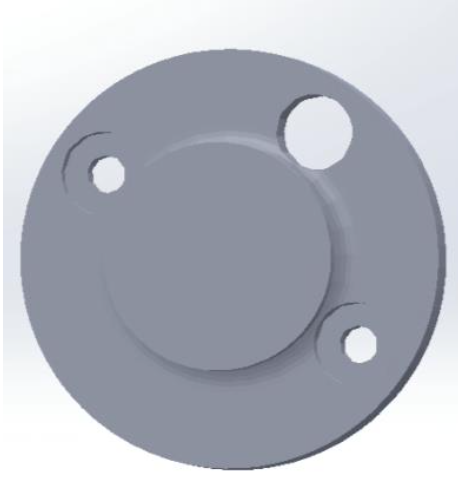
The initial design broke constantly under larger loads and transmitted force poorly, so a second was developed. The revision uses a smaller wrap diameter with a filleted edge, which strengthened it considerably. The small holes fix the pulley to the motor; the large one takes the tendon knot.
Passive extension
The tendons and motor provide active flexion, but a passive extension mechanism is also needed. Passive extension aids grasping, prevents out-of-plane motion of the finger, and reduces the number of actuators required.
Many grippers use springs between sections for this. Aiming for a lightweight design, we used elastic bands between the gripper sections instead — versatile and robust, since bands can be added for stiffer extension or removed for a more elastic one, all while staying light.
Gripper pads
After printing, Vitaflex-20 was poured into the mould areas, giving the gripper a soft gripping surface — the red section in the image — and making the design semi-compliant. A Hybrid Deposition Manufacturing approach was used, so once moulding was complete the sacrificial sections of the print could simply be removed and discarded.
Experimental findings
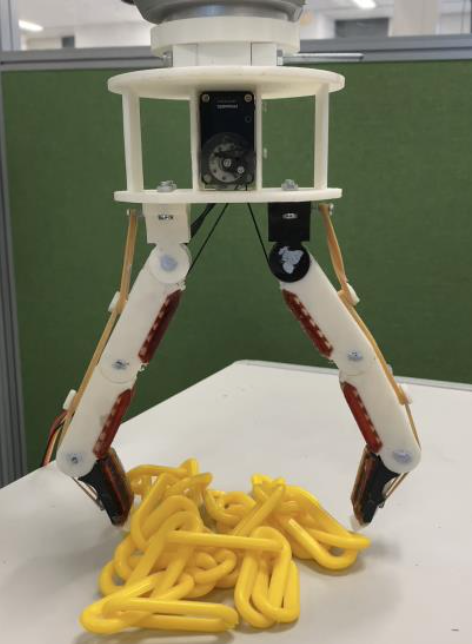
The fingers turned out too large. Gripping big objects such as a 1.5 L bottle, the fingers could not wrap far enough around; the size also hindered force transmission badly and made pinch grips with the fingertips nearly impossible.
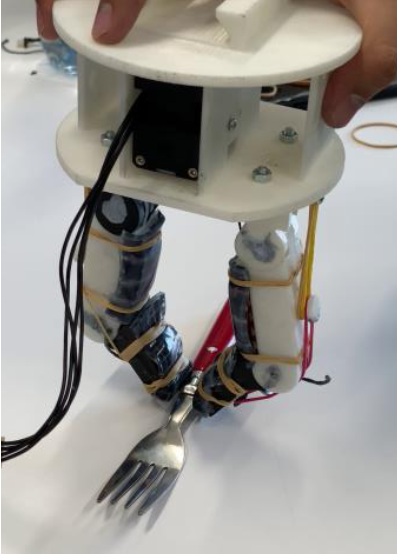
The middle section of each finger was therefore removed, leaving a two-joint design. This greatly improved both force transmission and geometric grasping.
Acknowledgements
I would like to specially thank my Biomechatronics 2020 professor, Minas Liarokapis, without whom this project could not have been completed. I would also like to thank Yale University, whose work and previous designs in dexterous grippers were of great use.